Kumite Champ — Bringing Remote Multiplayer to the Original Karate Champ Arcade Game
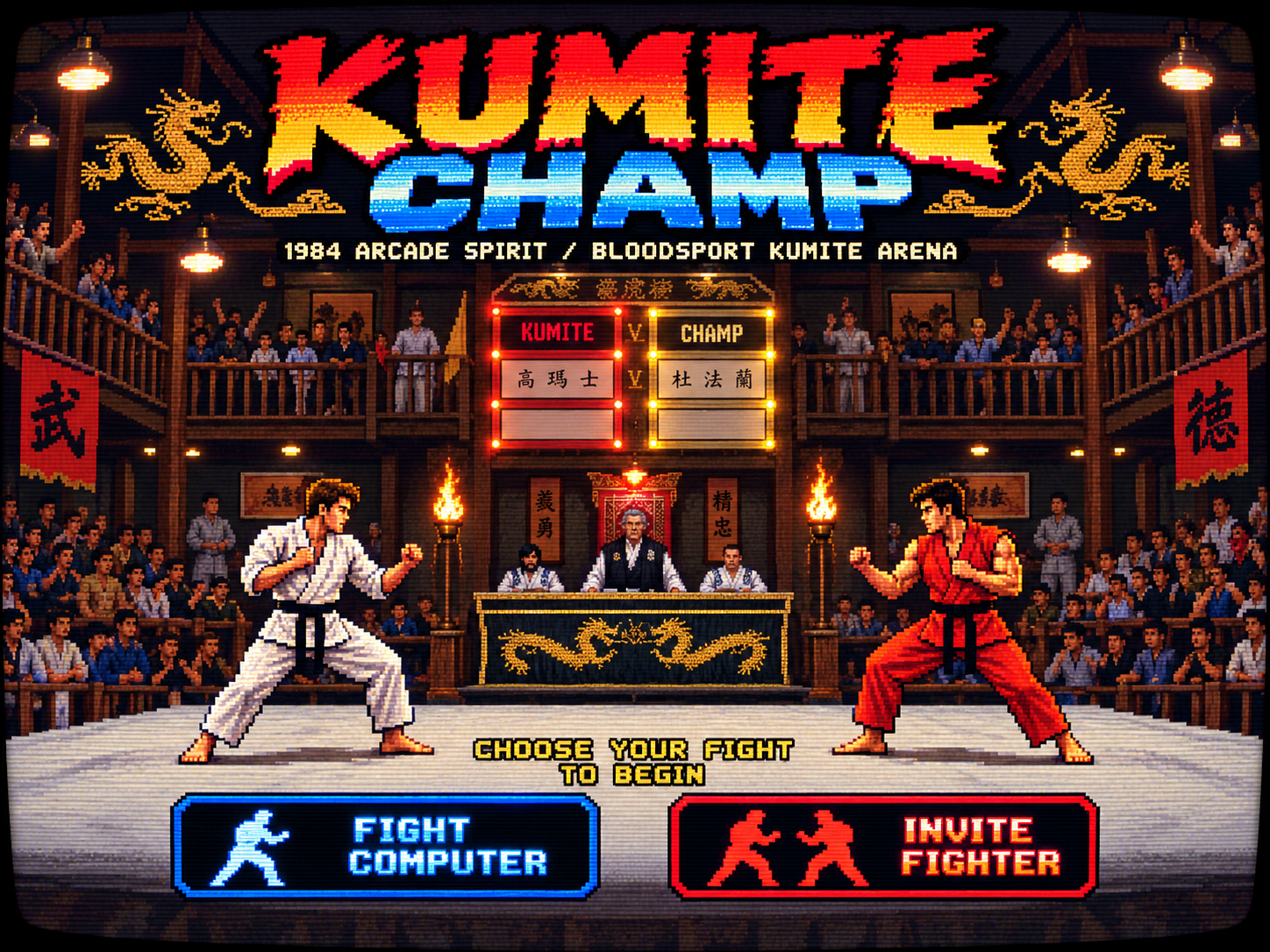
Kumite Champ started as a personal retro-gaming project with an unusual connection to movie and arcade history.
Before Bloodsport became a martial-arts classic, producer Mark DiSalle and I had an ongoing rivalry playing Karate Champ: Player Vs Player at Westworld Electronic Amusement Center in Marina del Rey, California. That rivalry ultimately became part of the story behind Karate Champ appearing in Bloodsport.
More than 40 years later, I wanted to take the original arcade experience one step further.
The Challenge
There are many websites where you can run the original Karate Champ ROM through a browser-based emulator.
What they generally do not provide is what made the Player Vs Player arcade cabinet so much fun in the first place: another human opponent.
The goal of Kumite Champ was therefore not to recreate Karate Champ as a new game.
The goal was to build a network layer around the original Karate Champ: Player Vs Player arcade runtime and allow two people on different computers, in different locations, to fight each other live over the Internet.
Building Remote Multiplayer Around a 1984 Arcade Game
The project required combining modern web technology with an arcade program that was never designed for Internet multiplayer.
Kumite Champ was developed as a Node.js / Express / Socket.IO application running a browser-based FBNeo arcade runtime through EmulatorJS.
Rather than rewriting the game mechanics, we preserve the original arcade game and synchronize the players around it.
The multiplayer architecture handles:
- private two-player match creation
- Player 1 / Player 2 assignment
- synchronized remote control input
- authoritative server-side input sequencing
- frame-based input scheduling
- connection latency monitoring
- emulator state synchronization
- runtime state hashing and synchronization diagnostics
- keyboard and gamepad control mapping
- automated startup of the original two-player arcade mode
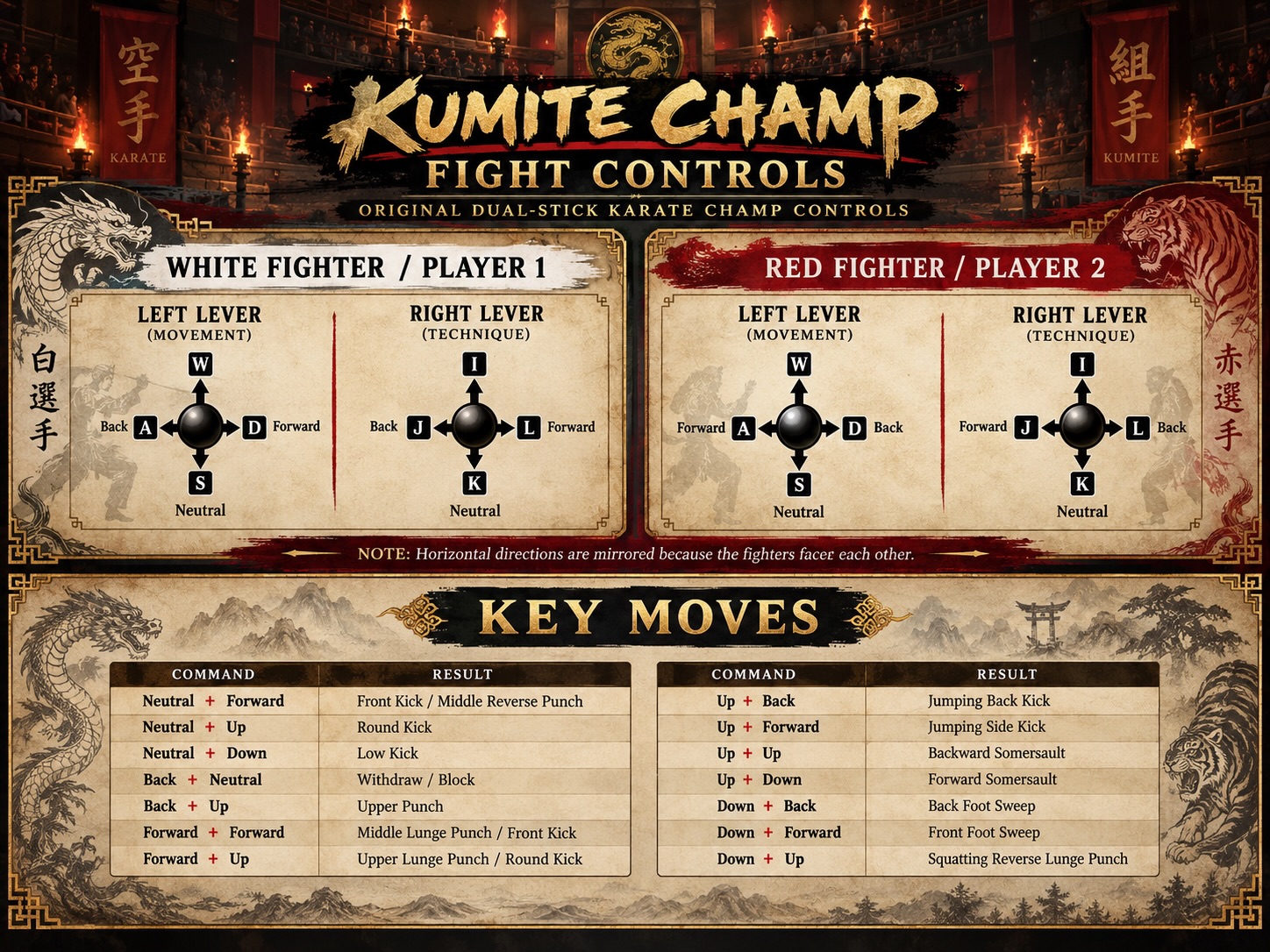
One of the more interesting engineering challenges was adapting the game’s original dual-joystick control system to modern keyboards and game controllers while maintaining the exact Player 1 and Player 2 mappings expected by the arcade runtime.
The result is still the original Karate Champ game engine — but with a modern network system operating around it.
Private Kumite Matches

The multiplayer experience was designed to be simple for the player even though considerably more is happening behind the scenes.
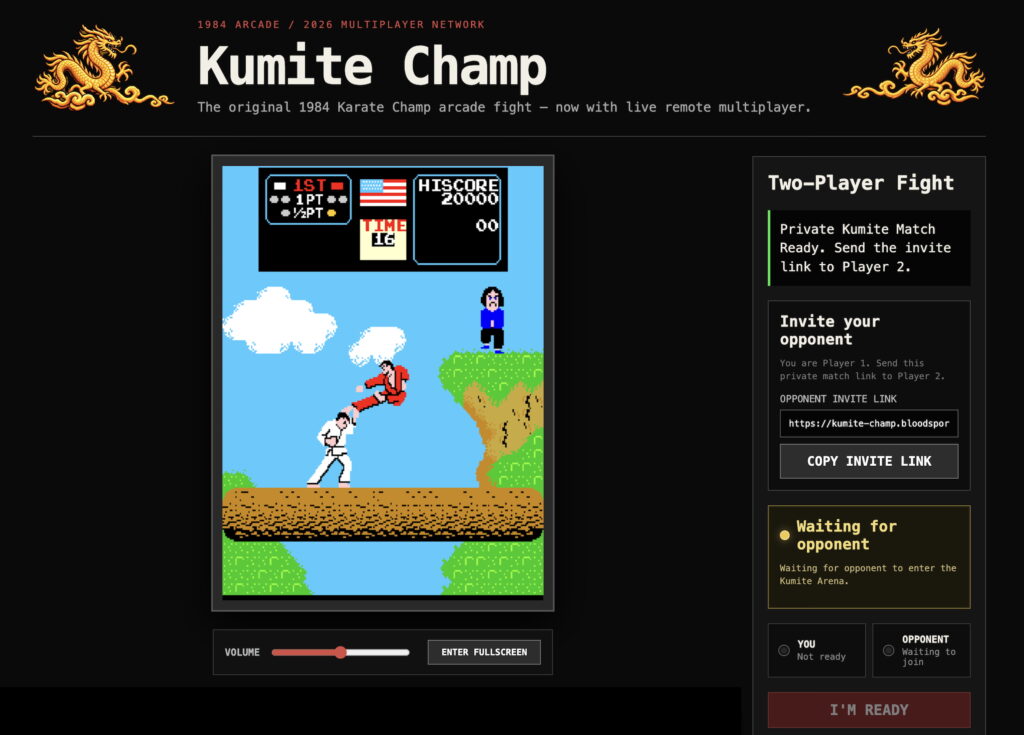
Player 1 selects Invite Fighter.
Kumite Champ automatically creates a private six-character Kumite Match Code and a unique invitation URL.
Player 1 can either:
- send the opponent the private invitation link, or
- simply give them the Match Code.
Player 2 can open Kumite Champ from another computer, select Join Match, enter the code, and connect directly to Player 1’s private match.
Once both fighters are connected and press READY, the system initializes the original two-player arcade game, synchronizes the emulator state between the two browsers, and begins the fight.
The invitation URLs also have their own server-rendered social metadata and custom “You’ve Been Challenged to Kumite Champ” sharing experience, making the invitation itself part of the game.
Mobile Gaming Experience
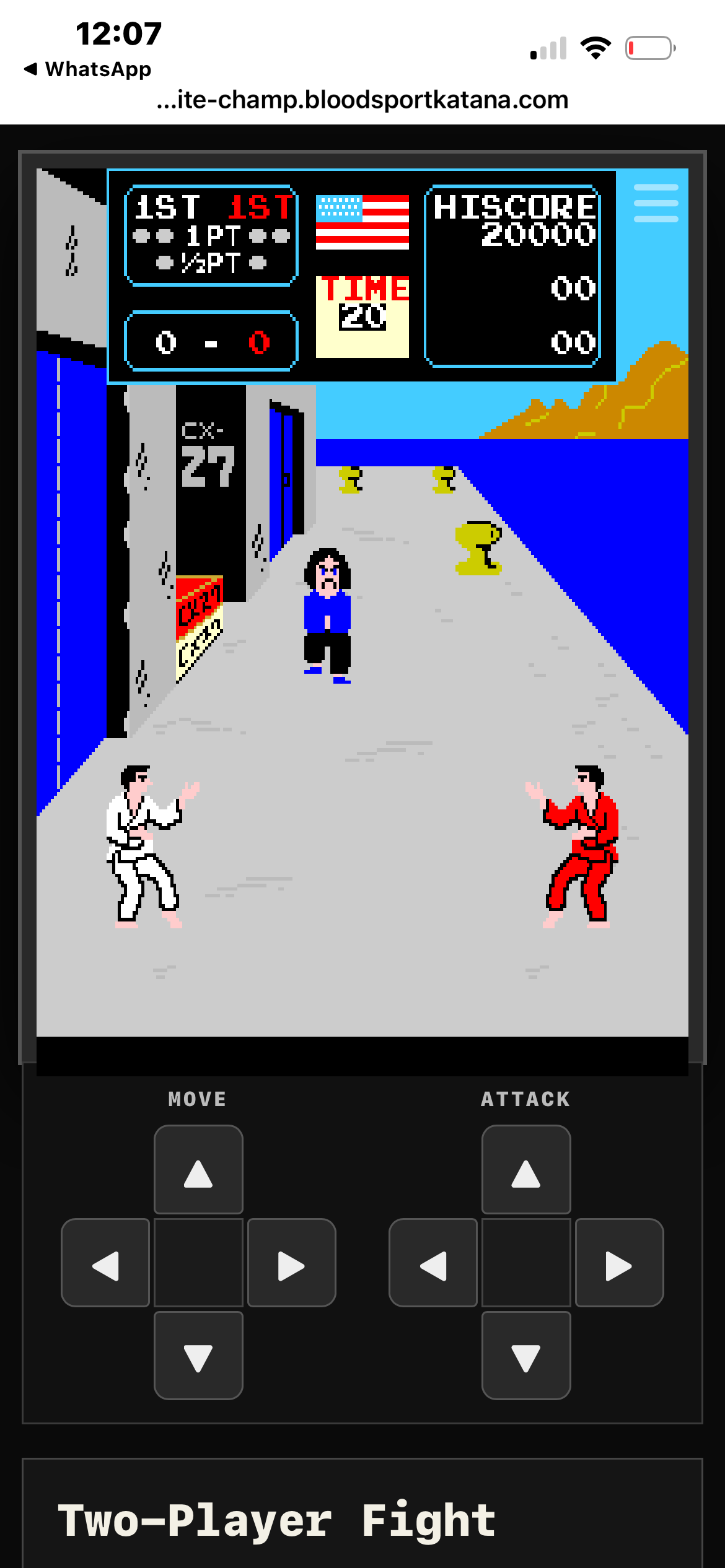
KUMITE CHAMP brings the original arcade controls to a phone with a custom touchscreen interface. Dedicated on-screen directional controls adapt Karate Champ’s dual-joystick movement and fighting techniques for mobile gameplay, alongside the same private online multiplayer experience.
The Engineering Side
The original Karate Champ control scheme uses two joysticks per fighter: one for movement and one for fighting techniques. The following project control guide illustrates how the four-stick arcade controls are adapted for keyboard play.
From a software architecture perspective, Kumite Champ became an interesting experiment in applying current web and realtime technologies to software written for completely different hardware and assumptions.
The project combines:
Node.js / Express for the application and game services
Socket.IO / WebSockets for realtime multiplayer communication
FBNeo for the original arcade runtime
EmulatorJS for browser execution
Server-authoritative input scheduling for synchronized control events
Save-state synchronization for bringing independent emulator instances into a common game state
State hashing and telemetry for detecting synchronization differences
Responsive browser UI for game, match creation, invitations and diagnostics
DigitalOcean / Nginx / PM2 / SSL for production deployment
A significant part of the development work was not simply getting two browsers connected. It was determining how two independent instances of a 1980s arcade program behave when their controls and internal state need to remain synchronized over modern Internet connections.
This required building diagnostic tooling capable of recording frame position, input sequencing, state hashes, latency and synchronization behavior throughout an entire match.
That engineering work provides a foundation not only for Kumite Champ, but also for future realtime multiplayer and tournament systems based around classic games.
Something Different From a Retro Emulator Site
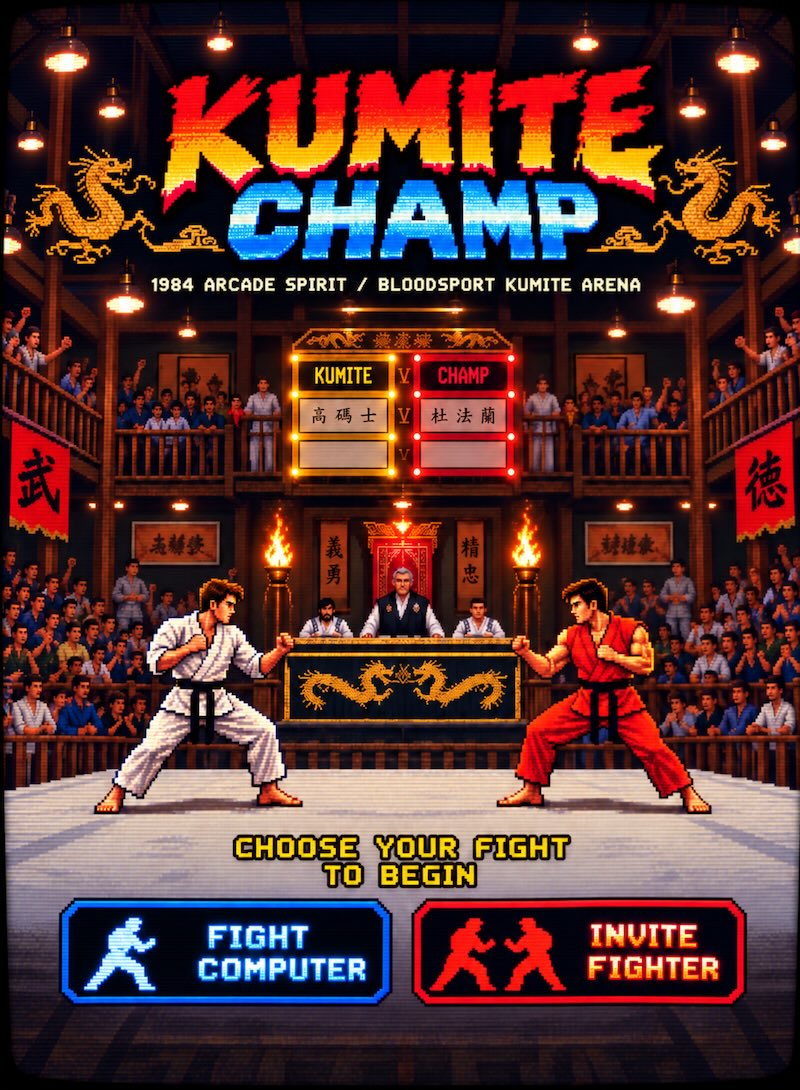
Kumite Champ is intentionally different from a typical retro-gaming website.
A normal emulator page lets someone run Karate Champ in a browser.
We built what ordinary Karate Champ emulators don’t provide: live remote Player Vs Player competition over the Internet.
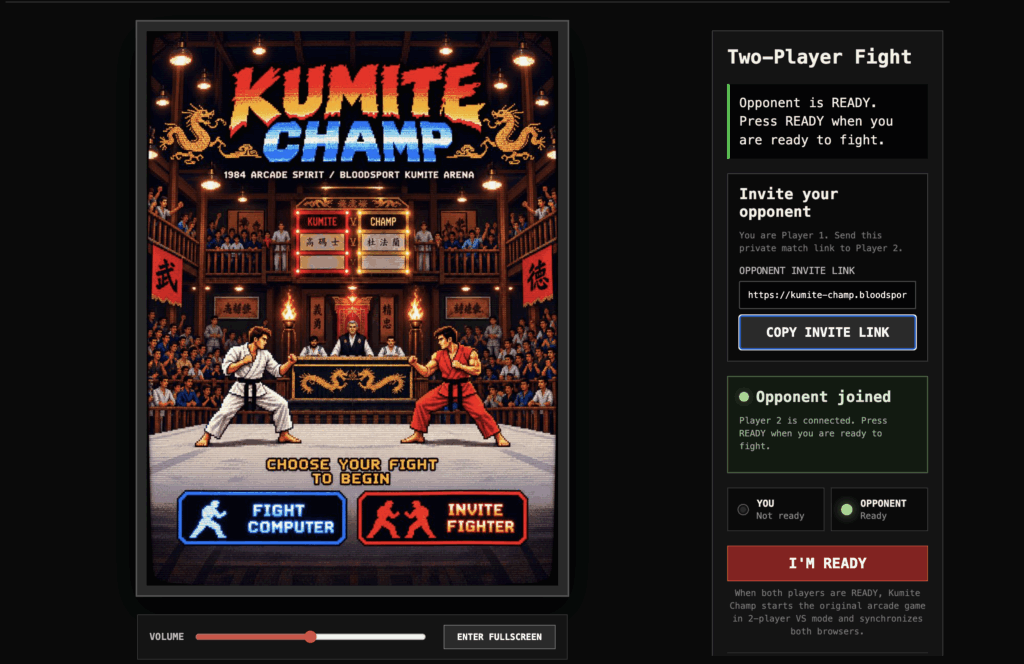
Player 1 can be in California while Player 2 is in Mexico, Europe or anywhere else with an Internet connection — and both fighters are controlling the original Karate Champ Player Vs Player arcade experience.
The original arcade cabinet required two players standing next to each other.
Kumite Champ turns that same concept into a private Internet match.
From Arcade Rivalry to Multiplayer Network
What started as a small project connected to an old arcade rivalry became a much more interesting technical challenge involving realtime networking, emulator internals, input synchronization, state management and production deployment.
It is exactly the type of project I enjoy building at eRossi Media: taking an existing technology or experience, identifying something it was never designed to do, and engineering the systems required to make it possible.
Verified Fight History & Automatic Social Fight Cards
Kumite Champ extends beyond the arcade screen with a match-history and social publishing system. After a multiplayer fight, both connected browsers report the outcome; only matching, verified results enter the public Fight History. Every three verified fights are grouped into a custom Fight Card, with country flags, scores, and fighter details.
An independent rendering worker creates the matching eight-second animated Fight Card video, complete with custom crowd ambience and synchronized card-lock sound effects. The application displays the static Fight Card on the website and supports sharing the actual video and its accompanying caption, while the publishing workflow handles automatic Facebook video posts and safeguards against duplicates.
Technology: Validated multiplayer results, event-driven publishing, background video rendering, media processing, persistent match history, social sharing, and automated publishing workflows.
One Original Arcade Game, A Modern Multiplayer Platform
The original 1984 arcade game remains responsible for its fighting moves, referee decisions, scoring, and animation. An original Kumite Champ software builds the surrounding system: browser delivery, networking, private invitations, synchronized matches, modern controllers, verified results, history, and social features. The latest development work also includes an automated 16-fighter tournament architecture, which remains in testing and is not yet presented as a live production feature.
Play online: KumiteChamp.com
1984 Arcade. 2026 Multiplayer Network.
Now challenge a fighter anywhere in the world.